

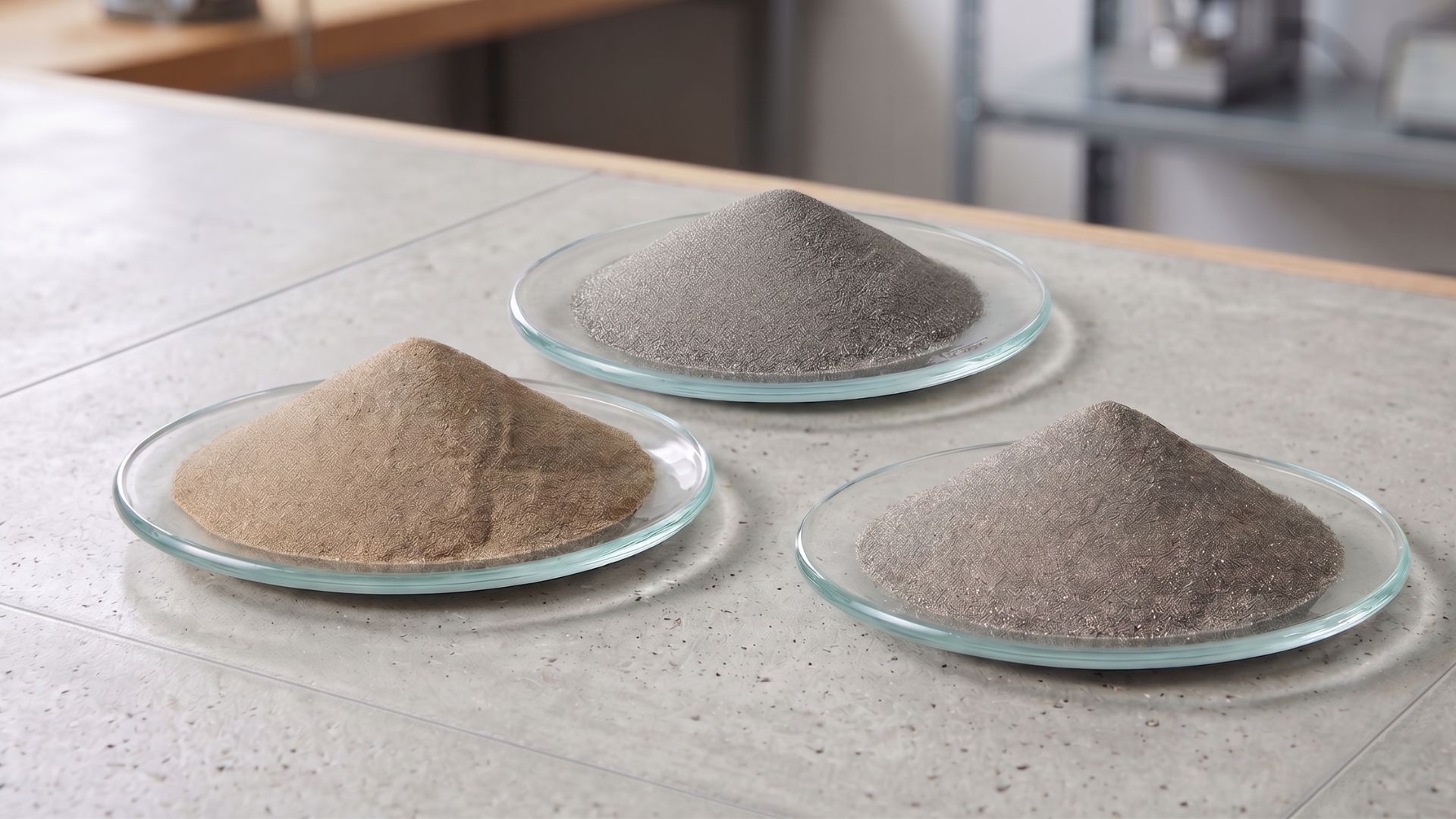
The The moisture content of the atomised dust has a direct influence on its behaviour during filling and compaction. However, its relationship with the tile density It cannot be summarised by a simple rule such as ‘the higher the humidity, the greater the density’.
Water affects the flowability of the powder, its bulk density, the deformability of the granules, expansion after pressing and shrinkage during drying. Therefore, A change in humidity can affect the mass loaded into the mould, the dry bulk density and, finally, the dimensions and behaviour of the piece during firing.
Under industrial conditions, the aim is to maintain a stable and appropriate value for each composition and for the conditions required by the forming process.
Why moisture is a critical variable in ceramic pressing
The pressed tile It is formed from a bed of atomised powder which must fill the mould and be compacted under pressure. The result depends on several interrelated variables:
- Composition of the paste.
- Particle size distribution and morphology of the granules.
- Moisture content of the atomised powder.
- Flow and filling density.
- Dough placed in the tin.
- Maximum pressing pressure.
- Cycle speed and sequence.
- Geometry and condition of the fuel system.
Given the same composition, the The bulk density of the piece depends mainly on the pressure applied and the moisture content of the powder. This relationship is represented by what are known as compaction diagrams, which are used to define and adjust the pressing conditions. In the manufacture of tiles by wet pressing, the following are commonly used: moisture content of around 4–7 per cent, although this range should not be interpreted as a universal value for any pasta or product.
The significance of this variable extends beyond the press. The technology guide produced by ITC and ASEBEC It highlights the interdependence between the different stages of the process: the moisture content of the spray-dried material determines the density of the pressed part, which in turn influences shrinkage during firing.
How does humidity affect the formation of the piece?
To understand its effect, it is helpful to distinguish between three stages: mould filling, compaction and pressure relief.
Effect on mould filling
Before pressing, the powder must pass through the feeding system and fill the available volume in the die cavity. Its moisture content affects the interaction between the granules and, consequently, the way in which they are distributed.
A study on porcelain stoneware found that, for the composition examined, the packing density decreased as the humidity increased, with a more pronounced effect above approximately the 5 per cent. When working with a specific mould volume, this reduction may result in a lower quantity of dry material being loaded.
This has a practical implication: although the apparent volume of powder fed in may appear similar, the dry mass available for forming the part may have changed.
Furthermore, a Non-uniform moisture content within a batch can lead to differences in flow properties.The problem is not simply that the average moisture content is high or low, but that different fractions of the powder reach the press with different properties.
Effect on compaction
During compaction, the granules are progressively rearranged, deformed and fractured. Water facilitates this deformation and alters the friction between particles, thereby enhancing the powder’s ability to densify.
Studies on atomised powders intended for use in large sheets indicate that Moisture is one of the main factors affecting its compressibility. They also show that uniform compaction is crucial to preventing gradients in porosity and density, which can subsequently lead to differential shrinkage and deformation during firing.
At the same pressure, a powder with the correct moisture content can be compacted more easily and achieve a higher dry density. However, this effect goes hand in hand with a possible reduction in bulk density. Therefore, the final result depends on the combination of humidity, loaded mass, pressure and specific characteristics of the spray.
Effect on expansion after pressing
When the pressure is released, the part undergoes a slight elastic recovery or post-compression expansion, commonly known as springback.
A study carried out with the involvement of the ITC modelled howThe moisture content of the atomised powder and the compaction pressure influence the elastic recovery following pressing —springback—, on the dry bulk density and on the dimensional behaviour of the workpiece (Santos-Barbosa et al., 2013).
Full bibliographic reference: Santos-Barbosa, D., Hotza, D., Boix, J. and Mallol, G. (2013). Modelling the Influence of Manufacturing Process Variables on Dimensional Changes of Porcelain Tiles. Advances in Materials Science and Engineering, 2013, 142343. DOI: 10.1155/2013/142343.
If this response is not uniform across the entire surface, local variations in size, stresses or structural weakness may occur. Inlarge formats, even small dimensional variations become more significant because of the distance over which they act.
Why higher moisture content does not always mean higher dry density
The relationship between humidity and density involves severalsimultaneous effects:
- Higher humidity can make it easier to deformation of the granules during compaction.
- It can also reduce the filling density and the amount of dry matter introduced into a fixed volume.
- Adjust the post-pressing expansion
- Moisture is almost entirely removed during drying, and this affects the shrinkage of the piece during drying.
- Its effect depends on the composition, particle size distribution and the pressure applied.
Therefore, there is no optimum humidity level that can be automatically transferred from one folder to another, or from one format to another.
The right question is not ‘How much moisture does any atomised substance need?’, but rather:
What combination of moisture and pressure enables this composition and this product to achieve the target dry density and a sufficiently uniform distribution?
This relationship must be established experimentally using a specific compaction diagram.
What consequences can unstable humidity have?
An uncorrected fluctuation in humidity can propagate throughout the process and manifest itself in various ways.
Variations in mass and thickness
If the filling density changes, the dry mass fed into the mould may vary. When the press operates with defined positions, strokes or final thicknesses, this variation affects the relationship between loading and compaction.
The equipment can maintain a stable nominal pressure whilst still producing parts with different masses or different dry densities.
Density variations
The average moisture content does not indicate how the water is distributed throughout the powder. Nor does it guarantee that the mould is filled uniformly across its entire surface.
Differences in particle size distribution, segregation in the silos, insufficient settling times or variations in the feeding system can result in the component having areas with different mass, thickness or density.
Two pieces may have a similar average density, yet exhibit very different internal structures.
Differential shrinkage and dimensional stability
Dry density affects the subsequent shrinkage of the component. When the distribution is not uniform, different areas may shrink differently during drying and firing.
These differences may contribute to:
- Variations in diameter.
- Loss of flatness.
- Longitudinal or transverse warping.
- Helical distortions.
- Residual stresses.
- Breaks during cutting or grinding.
The model developed by Santos-Barbosa, Hotza, Boix and Mallol explicitly links moisture content and compaction pressure to dry density, and the latter to firing shrinkage and final dimensions.
Mechanical strength of the unmachined part
The apparent density It is a practical way of controlling the porosity of the pressed substrate. A less compacted area has fewer effective contacts between particles and may offer lower mechanical strength.
This increases the risk of breakages during:
- The press exit.
- Conveyor transport.
- Handling.
- Entry into the drying chamber.
- Pre-glazing operations.
Density is therefore not merely an isolated laboratory measurement. It is a variable that determines the stability of the product and the continuity of the production line.
The role of compaction diagrams
A compaction diagram shows the dry density achieved as a function of pressure and the moisture content of the spray.
Its purpose is to answer an operational question: if the moisture content changes, how should the pressure be adjusted to maintain the target density?
The technical literature describes systems in which moisture content is measured and the maximum pressing pressure is automatically adjusted to stabilise the bulk density. ITC and ASEBEC consider this strategy to be a mature technology, particularly in the manufacture of porcelain stoneware.
However, the diagram must be correctly characterised for each composition. Significant changes to the body, the particle size distribution, the additives or the product can alter its response.
Furthermore, maintaining the average densitydoes not in itself guarantee that the distribution will be homogeneous. A system may compensate for a general variation in moisture content whilst, at the same time, retaining local differences caused by filling, the mould or the feed.
How to control moisture and density on the production line
A robust control system should combine the following checks:
1. Measure moisture at a representative frequency
A single measurement may not reflect temporary fluctuations or differences between silos, batches or fractions of the powder. The frequency and location of measurementsmust enable the detection of variations that actually reach the press.
2. Work with an up-to-date compaction diagram
Pressure should not be adjusted using a generic rule. The technical team needs to know the specific response of each paste within its usual moisture and pressure range.
3. Monitor mass, thickness and density together
A variation in densitymay result from a change in compaction, but also from a difference in feed rate or thickness. Analysing a single variable can lead to an incomplete diagnosis.
4. Review stability following product changes
The Changes to format, composition, particle size, embossing or thickness alter the operating conditions. It is advisable to revalidate the relationship between feed rate, moisture content, pressure and density.
5. Do not limit yourself to the average value
The average density is useful for tracking general trends, but it can mask differences between the centre, the edges, the corners or the various cavities within a single press run.
6. Correlate press data with subsequent defects
The information becomes more valuable when it allows you to link a deviation to its consequences during drying, firing, sorting, cutting or grinding.
From the average value to a complete map of the part
The moisture measurement provides information on an input variable. Thiscompaction diagram enables an estimate of how to adjust the pressure. However, to complete the analysis, it is necessary to verify which part has actually been formed.
This is where Tekinn’s X-ray inspection comes into play.
Our technology does not directly measure the moisture content of the atomised powder. It analyses the combined result of filling, loading, geometry and compaction using comprehensive maps of:
- Density.
- Thickness.
- Mass distribution.
The This non-destructive inspection allows the entire part to be examined and identifies inhomogeneities that might be concealed in an average measurement or a small number of data points.
This information helps the technical team answer more specific questions:
- Has the pressure adjustmentmaintained the target density?
- Has the Is thedensity
- distributed evenly? Is there a difference in loading
- between the centre and the edges?
- Is the likely cause the overall moisture content, filling, dosing or the press settings?
The map should not be interpreted in isolation, nor does it allow heterogeneity to be automatically attributed to moisture. Its value becomes apparent when it is correlated with spray-drying measurements, pressing parameters and production history.
To explore this point further, we recommend consulting our article on the importance of measuring bulk density after compaction and the technical explanation of X-ray absorption applied to compaction verification.
Frequently asked questions about moisture and density
Does higher moisture content always increase dry density?
No. It can facilitate the deformation of the granules and improve compaction at a given pressure, but it can also reduce the filling density and the amount of dry matter loaded. The result depends on the composition and the operating conditions.
What is the correct moisture content for atomised powder?
There is no universal value. In tile production, values of approximately 4–7 per cent are commonly found, but the operating point must be defined for each paste, format, thickness and pressing system.
Can a variation in moisture content be compensated for by adjusting the pressure?
Yes, within the operating window characterised by the compaction diagram. Automatic systems can adjust the maximum pressure according to the moisture content to maintain the average density.
Does maintaining the average density eliminate all heterogeneities?
No. The average does not show how the density is distributed within the part. Local differences relating to filling, dosing, the mould or pressure transmission may persist.
Does Tekinn measure the moisture content of the spray-dried material?
Not directly. Tekinn measures the distribution of density, thickness and mass in the finished part. This information complements moisture control and allows the actual effect of moisture on the pressed product to be verified.
Controlling moisture requires verifying its actual effect
The The moisture content of the atomised powder is one of the most influential variables in ceramic pressing, but it does not act alone.
Its effect depends on the Pressure, composition, particle size distribution, mould loading and the stability of the feeding system
also play a role. Therefore, a moisture reading must be interpreted in compaction diagram conjunction with
the process and the resulting part.
Measuring the input variable helps to anticipate deviations.
Visualising the distribution of density, thickness and mass allows you to check whether the process has produced a truly homogeneous part.
At Tekinn We carry out demonstrations using real parts and provide a technical report on the maps obtained. Request a no-obligation demonstration and see what information X-ray inspection can provide for your pressing process.
Technical sources consulted
- Santos-Barbosa et al. — Modelling the Influence of Manufacturing Process Variables on Dimensional Changes of Porcelain Tiles
- ITC–ASEBEC — Asebec 4.0 Guide
- Qualicer — Control of bulk density during pressing
- Soldati et al. — Pore evolution and compaction behaviour of spray-dried bodies for porcelain stoneware slabs